Daisy
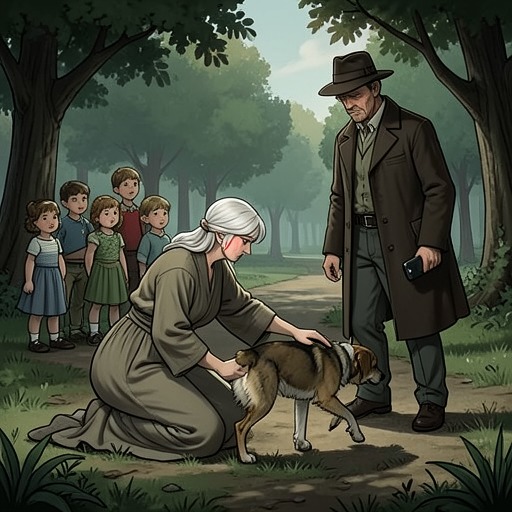
New Life as a Max Level ArchmageDaisy is a young girl in Prismarche whose determination to recover her missing cat, Monocle, creates one of the clearest small-scale encounters between ordinary affection and extraordinary magic. Through her, the story gives emotional weight to an apparently minor quest: the reward is only one gold piece, yet Daisy’s distress, persistence, and ecstatic reunion reveal why Saffra accepts such humble work and why Vivisari Vexaria chooses to intervene from the shadows.
Identity and Introduction
Daisy is approximately nine or ten years old, with brown hair and brown eyes, and lives in a wealthy-looking three-story manor in one of the better parts of Prismarche, outside the Noble's District. Her household is sufficiently prosperous to print and distribute missing-person-style posters for a pet and to offer a full gold piece as a reward, but the setting does not present the family as aristocratic or fabulously rich. A maid receives Vivisari Vexaria at the door and later assists Daisy throughout the search, placing Daisy within a comfortable domestic household supported by servants. Daisy first appears as the person responsible for the campaign to save Monocle. She enters the sitting room with evident hope and immediately asks Vivisari Vexaria whether she knows divination magic. The question establishes both Daisy’s urgency and her willingness to seek help from a powerful stranger. Her expectations are not cynical or strategically calculated; she approaches magic as a possible answer to a personal crisis and treats Vivisari Vexaria’s abilities with open wonder.
The Search for Monocle
Monocle is a distinctive black-furred cat whose poster depicts him as a dapper gentleman; his name is associated with the black fur around one eye. Daisy explains that the household did not brush him often, but she remembers a pale blue ball of yarn that he played with every day. The yarn has been shredded through repeated use, making it an especially strong conceptual link to Monocle for divination. Daisy’s willingness to supply the toy gives the search its practical magical basis while also showing how closely she observes the pet’s habits. Vivisari Vexaria uses the yarn and receives images of Monocle leaping through an open window, fleeing after a noise, crossing a low garden wall, and disappearing into the city. The visions eventually settle on a bedraggled cat hiding in a dark alley. Yet the divination does not produce a successful rescue: when Daisy asks whether it worked, Vivisari Vexaria admits that it did not and apologizes. Daisy’s hope visibly collapses, and she asks whether anything else can be done. Her reaction makes the failed spell more than a technical setback; the value at stake is the child’s confidence that an adult, and perhaps magic itself, can restore what she has lost. Vivisari Vexaria nevertheless decides that Daisy deserves a happier outcome. She imagines that Saffra’s earlier task may have involved a dejected child asking the approachable silver-badge adventurer for help, and resolves to locate Monocle while arranging for Saffra to receive the credit. Daisy is therefore the indirect cause of a concealed collaboration between two very different figures: a child’s poster brings Vivisari Vexaria into the case, while Vivisari Vexaria’s decision to protect Saffra’s morale redirects the rescue toward Saffra.
Reunion and Emotional Disclosure
Saffra eventually reaches Daisy’s house after a forty-five-minute effort to secure Monocle and transport him across the city. Daisy begins howling as soon as she sees the filthy cat. The noise and sobbing do not frighten Monocle; he appears content to be picked up and pampered. Daisy’s reaction transforms the animal from a poster subject and quest objective into a restored member of the household. Her tears are not merely distress but an expression of attachment finally released. Daisy’s mother is surprised and pleased by the reunion, although she immediately signals to the maid that the dirty cat should be cleaned. The contrast preserves the domestic scale of the episode: Daisy experiences Monocle’s return as an emotional triumph, while the adults must also manage the practical problem of bathing him. Saffra, meanwhile, is visibly delighted and refuses the offered full gold-piece reward, making Daisy’s gratitude and happiness more important than payment. The reunion also becomes the moment when Vivisari Vexaria’s attempt to remain anonymous fails. While petting Monocle and still responding to the maid’s increasingly desperate requests to have him bathed, Daisy asks Saffra whether the woman from earlier helped. She identifies that woman as the white-haired demon who called herself Vivisari Vexaria, explaining that the spell had seemed powerful and that she had expected it to work. Daisy then asks whether Vivisari Vexaria and Saffra know each other, because the timing and apparent connection have become too conspicuous for the child to ignore. Saffra denies any close acquaintance, saying only that she has seen Vivisari Vexaria at the Guild. She then rationalizes the successful search as coincidence, explaining that divination is unreliable and suggesting that Vivisari Vexaria merely read the poster and came to help. Daisy’s excitement over the revelation that Saffra has been passing out the posters breaks into another burst of tears, followed by a fierce hug. Saffra is visibly embarrassed but also secretly pleased, while Daisy’s response rewards the adventurer not with money but with unmistakable affection and admiration.
Relationships and Narrative Function
Daisy’s relationship with Monocle is defined by direct care and anxious persistence. She remembers the toy he used every day, endures the disappointment of failed divination, asks for another solution, and responds to his return with immediate physical affection. The story does not give her a broader biography, but these concrete actions make her attachment legible without requiring explanation: Monocle matters because his absence has disrupted the emotional order of her home. Her encounter with Saffra creates a second attachment centered on gratitude and trust. Daisy regards Saffra as the person who actually found Monocle, and Saffra accepts that role even though Vivisari Vexaria secretly engineered the favorable outcome. Daisy’s tears and embrace reinforce Saffra’s identity as an approachable, dependable adventurer. The episode thus shows why Saffra might accept low-status or sentimental requests that others could dismiss as beneath a powerful mage’s notice. Daisy’s relationship with Vivisari Vexaria is more indirect but narratively crucial. She first treats Vivisari Vexaria as an impressive magical helper, then innocently threatens the secrecy of Vivisari Vexaria’s plan by asking Saffra whether the demon assisted her. The child does not expose the truth maliciously; her candor simply ignores the social maneuvering that adults use to preserve credit and conceal alliances. Daisy’s openness therefore functions as both emotional sincerity and accidental pressure on Vivisari Vexaria’s disguise.
Significance and Lasting Image
Daisy’s episode places the grand powers of Vivisari Vexaria beside a single missing cat. Vivisari Vexaria possesses abilities capable of shaping far larger events, yet she chooses to use them to make the “actual hero” of the incident feel better and to give Daisy a win. The contrast makes Daisy’s search a measure of character rather than a trivial diversion. A shredded ball of yarn, a failed vision, a dirty cat, a refused gold coin, and a child’s hug become the materials through which compassion is practiced. The episode also establishes a pattern in which Daisy’s emotional honesty defeats elaborate plans. Vivisari Vexaria can manipulate the course of the rescue, but she cannot control what Daisy notices or asks. Daisy’s innocent question nearly collapses the carefully arranged fiction that Saffra found Monocle independently, yet the resulting conversation does not destroy the reunion. Instead, it lets Daisy affirm Saffra directly, while leaving Vivisari Vexaria to depart after recognizing that spying on the household has become intrusive. Daisy’s final narrative importance lies in that combination of vulnerability and force: she needs powerful people to help her, but her simple affection determines what the scene ultimately means.